Your Friendships Are Causing Heart Disease

Are friendships and social networking — real life or online — as important to your health as diet and exercise? You might not think so, but science is proving otherwise. Studies published many decades ago found loneliness in old age can have significant negative effects on health and longevity.

Recent research has connected the benefits of fulfilling social relationships and social networks directly to specific health issues, including inflammation, diabetes and cardiovascular disease—and not just in later life, according to a study published in the Proceedings of the National Academy of Sciences.

Real-Life Social Relationships
University of North Carolina, Chapel Hill researchers found the quantity and quality of social relationships throughout our lives affects our risk for developing cardiovascular disease during different stages of our lives. 

The study found socially active aging adults living longer and that social isolation in later life can be harmful, raising the risk for developing and controlling hypertension. They also found was that social relationships in our early years — particular adolescence — extremely important, setting the stage for good health and lowering the risk of hypertension.

During middle age, however, it’s not so much the number of social relationships we have but how deep and supportive (or strained) they are that affects health. There’s a link between social isolation in our younger years and increased risk of inflammation and obesity, raising the risk for hypertension and cardiovascular disease as we age. 

The study’s lead researcher believes broad social skills are as important to building the foundation for good health as physical activity, good nutrition and healthy eating habits. And while quantity of social connections is important when we’re both young and old, the quality of our relationships is what counts during our middle years.

Other research has found that social isolation and loneliness can directly increase a person’s risk of coronary heart disease and stroke by as much as almost a third (29 percent and 32 percent respectively) — similar to the impact of job stress and anxiety — two risk factors for coronary heart disease. 

Social Networking for Heart Health
Having meaningful relationships and support in person has tremendous value to our health, but so do some virtual relationships and support systems. Following health influencers and experts on social networks such as Facebook and Instagram, for example, can actually help you reach your health goals. You can read informative blogs, learn great tips and gather healthful recipes. And sharing the information among online friends helps you foster relationships that provide support and help keep you motivated — whether it’s completing a half marathon or maintaining a heart healthy diet. 

But there’s the phenomenon of ‘social contagion’—the indirect effect (positive or negative) that social networks can have on our health. Why? Because we’re so interconnected your friends’ friends on Facebook can also influence your health. If your friends friends are focused on living a healthy lifestyle, there’s a good chance everyone connected with them are too, which can ultimately benefit you. Unfortunately, the opposite can be true. Surrounding yourself online or in person with potentially destructive people may impact your health negatively. 

The Bottom Line
Socializing can help lower your risk of cardiovascular disease, and social support can help you recover from heart health issues. Share the status of your family relationships, social life, hobbies, community involvement and online presence with your primary care physician, cardiologist and other specialists so they can evaluate the depth of your relationships and how it may affect your health. Now it’s time to get out and ask your neighbor for a social hour. Perhaps you can even watch the Super Bowl LX with them!

Getting a Good Night’s Sleep Helps Your Heart

Do you like sleeping in on the weekends? Many of us look forward to staying under the covers on our Saturdays and Sundays, especially after a late night or a long week. The extra shuteye helps us recover from missed sleep during the week.

Or so we think. Unfortunately, this kind of inconsistent sleep pattern has consequences for our health – from our relationships to our diet, and, perhaps most importantly, our heart. And trying to catch up on the weekends doesn’t seem to help. Restorative sleep also happens to be one of the six pillars of lifestyle medicine, meaning it’s imperative!

According to a 2023 study, sleep irregularity and atherosclerosis are linked. Atherosclerosis is a condition where plaque — cholesterol, fats and other substances – build up along the arterial walls. This plaque can reduce the flow of oxygen to critical organs, ultimately leading to a heart attack or stroke.

How can your sleep patterns affect your arteries?

First, let’s discuss the benefits of good sleep habits. Our bodies remain busy, even while we sleep.

Throughout the night, our heart and respiration rates change. Our metabolism slows down, conserving energy. Blood pressure rises and falls. Hormones release to help repair cells and restore energy. The brain stores new information and rids itself of toxins. Even nerve cells get busy, talking to each other and reorganizing to support healthy brain functions.

These processes support many of the functions our bodies handle on a daily basis– from helping repair muscles to supporting our emotional health. Good sleep also can improve insulin regulation and strengthen our immune system. It even supports weight management efforts.

If you’re not getting enough sleep — or if your sleep schedule is irregular —you’re depriving your body of these benefits and putting yourself at risk for all sorts of conditions, including metabolic disorders, diabetes, heart disease and obesity.

The studies linking poor quality and irregular sleep to these conditions have been piling up for years. Consider one from 2019 on sleep and metabolism. In the study, researchers split a group of 36 people into three groups for a two-week experiment: the first group slept up to nine hours a night; the second was allowed only five hours of sleep; and the third slept five hours during the week but could sleep late on the weekends.

Participants in the second and third groups gained weight and had reduced insulin sensitivity, both risk factors for type 2 diabetes. That’s in just two weeks! Imagine the impact if they had kept up their poor sleep schedule.

So back to how this can affect our heart health. Earlier studies have tied poor sleep patterns to high blood pressure, type 2 diabetes, depression, asthma and obesity, which all negatively impact the heart.

The new study didn’t look just at a lack of sleep but at irregular sleep, as well. Participants who had irregular sleep schedules were more likely to have a coronary artery calcium score above 300, which is associated with a higher risk of heart attack. They were also more likely to have an abnormal ankle-brachial index, which can indicate narrowing or blockage of blood vessels that carry blood from your heart to your legs. Both indicate atherosclerosis.

How do you lower this risk? Start by getting more sleep and sleeping more regularly. Guidelines from the Centers of Disease Control and Prevention recommend that you sleep at least seven hours a night if you’re 18 to 60. If you’re older, you may need seven to nine hours.

If you’re having trouble getting enough sleep, work with your primary care physician. They know how important sleep is and can help coach you.

I like to sleep in on weekend mornings as much as the next person. Just don’t let those sleep-ins be a substitute for the sleep you should be getting every night.

Hearing Loss and Brain Health

When many people think about preventing dementia, they focus on mental exercises, physical activity and a healthy diet. But there’s another crucial factor that many people overlook: hearing health. Recent research has revealed a surprising and significant connection between hearing loss and dementia risk, offering us a new pathway to protect our cognitive function as we age.  

The Hidden Scope of Hearing Loss in America

Hearing loss is far more common than most people realize. While 37.5 million Americans have reported hearing problems, the actual number of Americans with some degree of hearing loss is closer to 48 million. This discrepancy highlights how many people either don’t recognize their hearing difficulties or choose not to acknowledge them.

The statistics paint a concerning picture. Risk increases with age, but surprisingly, two-thirds of Americans with hearing loss are younger than 65. Men between the ages of 20 and 69 have twice the risk of hearing loss when compared to women. Perhaps most troubling is that less than 30 percent of adults over 70 who could benefit from hearing aids use them, despite research showing that regular hearing aid use is associated with a 24 percent decrease in early death risk.

Why does this matter so much? Hearing loss is linked to several serious health conditions, including heart disease, depression, diabetes, falls and fractures, and dementia, which I am going to focus on.

Understanding the Hearing-Brain Health Connection

The relationship between hearing and brain health is more complex and significant than scientists initially understood. When you experience hearing loss, your brain doesn’t simply receive less auditory information – it fundamentally changes how it operates.

Researchers believe that hearing loss forces your brain to work significantly harder to keep up with conversations, enjoy music, or follow television programs. This additional brain power allocated to hearing comes at the expense of cognitive resources normally used for other mental skills, potentially affecting overall brain function.

Studies have even linked impaired hearing to brain shrinkage, suggesting that the strain of compensating for hearing loss creates measurable physical changes in brain structure. Additionally, hearing loss often leads to social isolation as people withdraw from conversations and social situations that they find challenging, creating another known risk factor for dementia.

Eight percent of all dementia cases are attributed to hearing loss.  

  • Mild hearing loss doubles your dementia risk  
  • Moderate loss triples it  
  • Severe hearing loss increases the risk fivefold  

These statistics make hearing health one of the most significant modifiable risk factors for cognitive decline.

Types and Causes of Hearing Loss

Understanding the different types of hearing loss can help you recognize symptoms and seek appropriate treatment.

  • Sensorineural Hearing Loss (SNHL) is the most common type of permanent hearing loss, typically caused by inner ear damage. Age-related hearing loss usually begins between the ages of 50 and 60 and cannot be corrected with surgery. It requires hearing aids for management.
  • Conductive Hearing Loss involves damage affecting the path from the outer ear to the middle ear. Unlike sensorineural loss, this type affects people across all demographics and is often treated with medical intervention.
  • Mixed Hearing Loss combines elements of both sensorineural and conductive loss, making it more difficult to hear, particularly speech, especially when background noise is present.
  • Auditory Neuropathy Spectrum Disorder (ANSD) is the rarest and least understood form, involving signal breakdown between the inner ear and brain. People with ANSD have trouble understanding speech regardless of their measured hearing level.

Recognizing the Signs and Symptoms

Hearing loss symptoms vary by age group and severity. Adults between 50 and 60 often first notice that speech seems mumbled or muffled, most often in social situations. Men’s voices typically remain easier to understand than women’s voices due to their lower frequency range.

For adults over 60, the statistics become more concerning. Thirty percent of older adults are affected by hearing loss, and this number jumps to 80 percent for adults older than 85. Symptoms become more pronounced and emotionally challenging, with higher risks of depression and social isolation.

Your Best Protection: Hearing Aids

If you have hearing loss, hearing aids offer remarkable protective benefits that extend far beyond simply amplifying sound. Research shows that hearing aids can lower your dementia risk to that of a person without hearing loss – a truly remarkable finding.

Hearing aids work by preventing your brain from overworking to process sounds, allowing cognitive resources to return to their normal functions. They also help maintain social connections, which help prevent isolation that contributes to cognitive decline. Modern devices are small and often virtually invisible, addressing many people’s cosmetic concerns.

Today’s hearing aids come in several styles:

  • Completely in Canal (CIC) devices are the smallest and least visible
  • In the Canal (ITC) aids are custom molded and sit partially in the ear canal
  • In the Ear (ITE) models fit in the bowl-shaped outer ear area
  • Behind the Ear (BTE) styles hook over the ear and offer the most versatility
  • Receiver in Canal/Ear (RIC/RITE) use a wire connection system
  • Open Fit designs keep the ear canal open for natural low-frequency sounds

When selecting a hearing aid, consider key features like noise reduction capabilities, directional microphones, volume control options, rechargeable batteries, wireless connectivity and remote controls. Also consider utilizing a board certified audiologist as many hearing aid dispensors do not have appropriate training to identify or treat complicated hearing loss.

Additional Strategies for Maintaining Hearing Health

Prevention remains your first line of defense. Reduce exposure to loud environments and keep volume levels below the 85-decibel threshold. Use protective ear gear in loud settings, invest in noise-limiting products, and give your ears regular breaks from noise exposure.

Early detection through testing is crucial. Get a baseline hearing test between ages 20-60, then follow up with annual hearing checks. Your primary care physician can provide referrals to audiologists when necessary.

Working with Your Healthcare Provider

Your physician plays a vital role in maintaining your hearing health. They can examine your ears for infections or earwax buildup, refer you to specialists when appropriate, address hearing health concerns openly, and monitor related health conditions.

As a patient, you will need to be honest with your doctor about your hearing struggles and concerns. Prepare questions before appointments, bring a trusted friend or spouse for support, take notes during visits, and request visit summaries to ensure you don’t miss important information.

Taking Action for Your Future

The connection between hearing loss and dementia represents both a challenge and an opportunity. While the statistics about increased dementia risk are sobering, the fact that hearing aids can essentially eliminate this increased risk is incredibly encouraging.

Remember, addressing hearing loss isn’t just about improving your ability to hear – it’s about protecting your cognitive function, maintaining your independence and preserving your quality of life for years to come. The sooner you take action, the better protected your brain will be against the preventable cognitive decline associated with untreated hearing loss.

Don’t let hearing loss silently steal your cognitive health. Take control of your hearing today and give your brain the support it needs to stay sharp and healthy throughout your lifetime.

Cutting Back on the Booze

Many people enjoy an occasional boozy indulgence. Unfortunately, our recognition of the risks related to drinking are often underestimated. Did you know that alcohol consumption is linked to multiple cancers, mental health disorders, cardiovascular disease, and overall risk of mortality? Let’s dive in.

Alcohol and its metabolite acetaldehyde are carcinogens linked to numerous cancers including breast, head and neck, melanoma, liver, prostate, gastric, and pancreatic. It is also implicated in fatty liver disease and cirrhosis. In fact, cutting back on alcohol consumption is one of the best ways to prevent fatty liver disease from transitioning to cirrhosis or hepatocellular (liver) cancer. Alcohol consumption also increases the risk of cardiac arrhythmias, heart failure, hypertension, myocardial infarction, stroke, depression, dementia, chronic pain and arthritis, gastroesophageal reflux (GERD), gout, and neuropathy. I cannot tell you the number of times alcohol has contributed to neuropathy in my clinic. This stuff is toxic to the body!

The impact of alcohol on human physiology also affects the way you feel and perform. First, alcohol calories are essentially “empty” calories as they hold no nutritional value. Think of every drink as an increase in adipose tissue deposition (fat), unlike when you consume calories from other nutritious sources that are converted to glycogen, a stored carbohydrate that’s good for exercise capacity. Second, alcohol inhibits the body’s ability to absorb vital nutrients including thiamine, vitamin B12, folic acid, and zinc. These essential nutrients are necessary for blood cell formation, metabolism, and immunity. This can impede muscle growth, muscle recovery, and memory via negative impacts on the hippocampus where learning and memory processing occurs. The impact of alcohol on human physiology doesn’t stop here. It also destroys your REM sleep and leads to chronic fatigue. Heavy alcohol use will impact these components the most. You aren’t functioning at peak performance if you drink alcohol.

What is a safe amount? The correct answer is none. Previous research argued that moderate use of alcohol was safe and potentially offered protective health effects. These studies were wildly flawed in controlling for co-morbid conditions and other confounding variables. However, partaking in an occasional drink with friends is not bad. The Centers for Disease Control and Prevention recommends women drink no more than 1 alcoholic beverage per day. The recommendation is no more than 2 beverages per day for men. This is not averaged over a week. This is the max recommended amount of alcoholic beverages per day. Regarding types of alcohol, red wine is arguably the “best” form of alcohol due to the antioxidant polyphenols it contains.

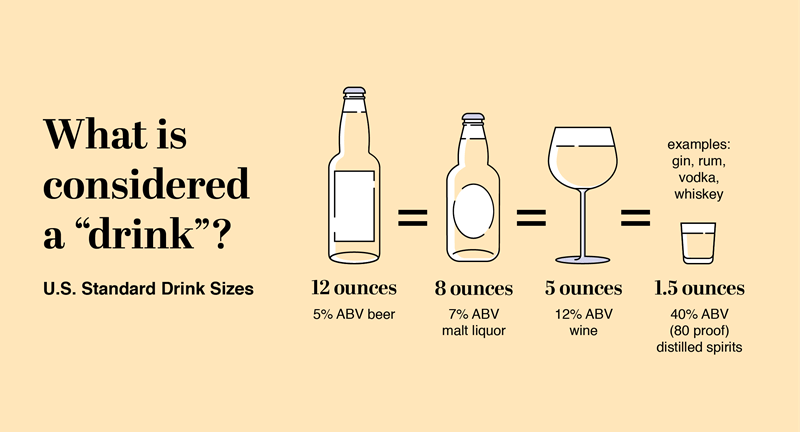
Now we need to understand what is classified as 1 beverage. Many of my patients incorrectly tell me they drink 1 cocktail per night but, when questioned further, are actually drinking closer to 1.5 or 2 cocktails per night based on volume of alcohol. Here is a table from the CDC to help you understand what one drink is by volume:

The first step in understanding heavy alcohol use is to define heavy drinking. It is also important to understand that you can be a heavy drinker and not have alcohol use disorder (ie. alcoholism). Alcohol use disorder is defined as heavy alcohol use plus impairment in self-control, physical dependence, social problems, and risky use like drinking and driving.

The patterns listed below are considered heavy drinking and are highly tied to alcohol use disorder and alcohol related bodily harm:

For women: 4 or more drinks on any day or 8 or more drinks per week.

For men: 5 or more drinks on any day or 15 or more drinks per week.

Before we talk about cutting back, it is important to remember that you should discuss quitting alcohol with your physician before beginning this journey; stopping alcohol consumption abruptly can be life threatening and I am not offering medical advice here. One method many people have found helpful is to have no heavy drinking days. Meaning you intentionally never drink more than 4 (women) or 5 (men) alcoholic beverages in a day. Committing to this has actually been shown to improve how heavy drinkers feel and function – it’s also used as a positive outcome in clinical trials, in addition to abstinence. Another method I have utilized to help patients cut back on alcohol is to replace alcoholic beverages with non-alcoholic beverages. I frequently recommend heavy beer drinkers replace 1 can of beer with 1 can of seltzer water. They still enjoy the fizzy burn as it goes down and you can still “crack the can.” This method will help you slowly cut back on the number of alcoholic beverages consumed per day.

Another method I recommend to heavy drinkers is to establish an accountability partner. You need to acknowledge that you have a drinking problem and ask your spouse, friend, or coworker to hold you accountable in cutting back. Tell this accountability partner your drinking limit and ask them to intermittently confirm your commitment to this journey. Alcoholics Anonymous meetings can help you locate an accountability partner and offer exceptional resources for drinkers. Another successful method to cut back is by setting a drinking limit before going to the bar. Bonus points if you tell your accountability partner this limit! Medications, such as naltrexone, disulfiram, and semaglutide, are also used in some people to curb alcohol cravings. Finally, treat alcohol like an addiction (it is!) and avoid people or places that you recognize as negative influences on your drinking patterns. If you always have 4 beers when you go to Buffalo Wild Wings, then consider getting the BDubs to-go and enjoy your Blazin’ wings at home!

Jalen Williams – a member of the OKC Thunder 2025 NBA Championship team – recently had his first beer which was widely publicized after the championship game. His response: “[It] was my first time drinking, ever… I had shots, champagne, beer: it was all disgusting. I’mma stick to Shirley temples.” You can be the champion of your life and quit drinking alcohol too!

Now, remember that everything in life is about balance. While cutting back on alcohol consumption is a sure-fire way to improve your health, it is important to remember the other components of a healthy lifestyle that I’ve discussed in previous blog posts. While many posts focus on dinner preparation, this post will break that trend and introduce you to my favorite breakfast.

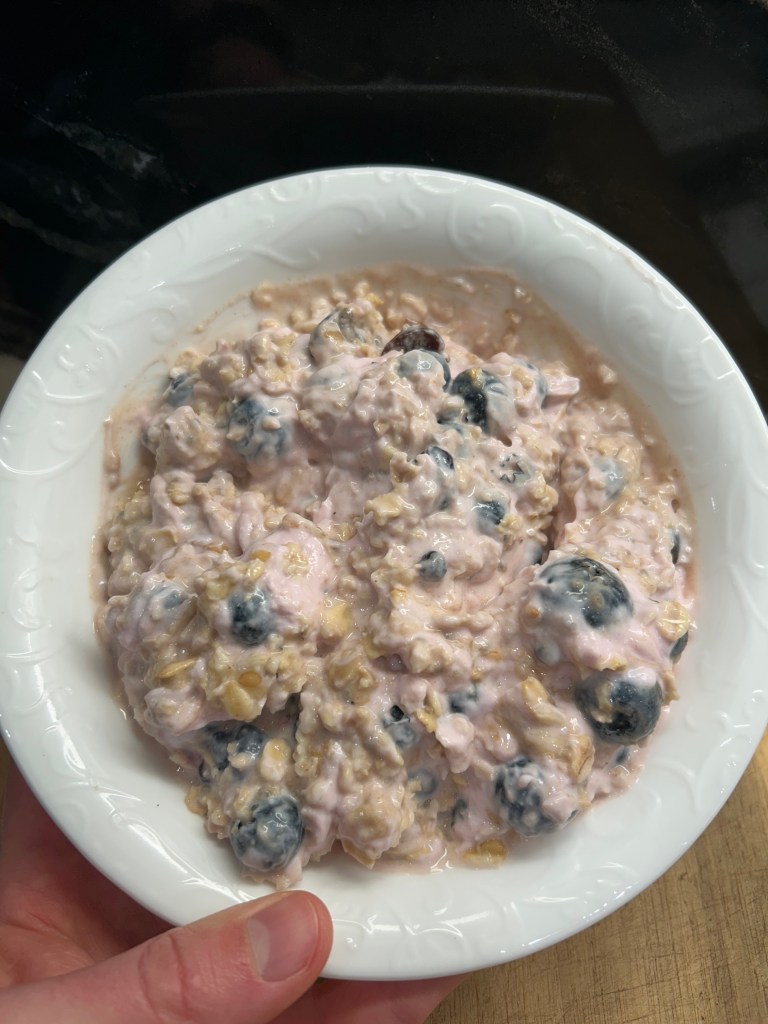
I have no idea what to call this but, as many of you know, I’ll throw about anything in a bowl and see how it tastes. This is a winner.

Add boiling water to 1/2 cup of steel cut oats. Let sit in the refrigerator for 20-30 minutes then fold in 1/2 cup of blueberries and 1 cup of flavored Greek yogurt (I like mixed berry). This meal has enough protein, fiber, and complex carbohydrates to keep you satiated until lunch while giving you a fantastic energy and anti-oxidant boost from the blueberries.

Exercise as medicine

The first marathon occurred in 490BC when an Athenian ran 26 miles from the battle of Marathon to Athens announcing the phrase “Victory” following successful defeat of the Persian army. The marathon was revitalized nearly 2500 years later in the 1896 Olympic games held in Greece. The winner had a time of 2:28:50. A picture of this race is depicted below. Since that time, hundreds of thousands of runners have completed the grueling 26.2 mile marathon across the world.

While running a marathon is an impressive feat and show of physical prowess, you don’t need to achieve this standard to improve your health. The Centers for Disease Control and Prevention (CDC) recommends U.S. adults obtain 150 minutes of moderate physical activity per week. Moderate activity includes brisk walking, playing tennis, water aerobics, dancing, or pushing a lawn mower. You don’t need to run a marathon to improve your health.

In fact, exercise is associated with reduced fatigue, stress, low back pain, and risk of falls. it is also associated with improved cholesterol, cardiovascular health, sleep, mental health, insulin sensitivity, biological health, pain perception in those with osteoarthritis, and sleep. Exercising 150 minutes per week has been linked to a 25% and 30% reduction in breast cancer and colon cancer, respectively.

These effects are amplified with more exercise. Impressively, achieving 150 minutes of brisk walking per week results in ~2.5 years of life gained. This increases to ~4.5 years of life gained with 500 minutes of brisk walking per week. These effects mediate inflammation in the body (IL-6, C reactive protein, TNF-alpha), gut microbiome through increased availability of short chain fatty acids, insulin sensitivity via the GLUT4 pathway, and cardiovascular health through increased nitric oxide and vascular endothelial growth factor production. As a result of these health benefits, the American College of Lifestyle Medicine now argues that physical activity should be a vital sign measured at your doctor visits. Kaiser Permanente healthcare system did this with over 1.7 million patients!

Although the goal should be to exercise at least 150 minutes per week, or 30 minutes 5 days per week, you should not be discouraged if you cannot achieve this due to your schedule or current physical health. For instance, if I did not have 30 minutes to exercise consecutively in a day, I would not exercise at all due to my own mental barrier. I’ve changed this negative perspective towards those busy work days and now will get at least 10 minutes of power walking before work, at lunch, and when I get home from work if this is all I can do. The key is to get your heart rate up. Many of my patients will take is to bring your lunch to work and walk while you eat. This is achievable if you set your mind to it.

Another barrier many people have is fear of physical activity due to current low levels of fitness. If this is you, the answer is to have SMART goals. S: specific. M: measurable. A: achievable. R: relevant. T: time-bound. For example, if you are currently walk less than 1000 steps per day due to pain, then you need to make a SMART goal specific to your current state. I would recommend taking small steps first. In this scenario, your SMART goal may be the following: ‘I will walk 1500 steps per day and perform chair yoga (look it up, it’s free on Youtube!) for 10 minutes each morning for 2 weeks.’ Once this goal has been accomplished, you expand upon the previous SMART goal and create more challenging SMART goals. More advanced athletes should also have SMART goals to accomplish at least the minimum standards of 150 minutes per week.

Finally, you need peer support (or peer pressure if you are a glass half empty kind of person). This should come in the form of family and friends as well as your personal physician. Tell your friend that you are on an exercise journey to reduce your risk of breast or colon cancer. Bring them on your next lunchtime power walk. Ask them to be your accountability partner. This should also come in the form of your physician. Physicians who are physically active are more likely to encourage and counsel patients on healthy lifestyles compared to inactive physicians. They also have real-world physical activity experience and tips that can help you along your lifestyle journey. Finally, having a physically active physician can provide first hand experience and counsel to help you improve. You should always ask your physician before starting any physical training program. Find your accountability partner, create a team, and share tips on how you improved physical activity in your life below. Here’s a picture of my team from a recent race.