
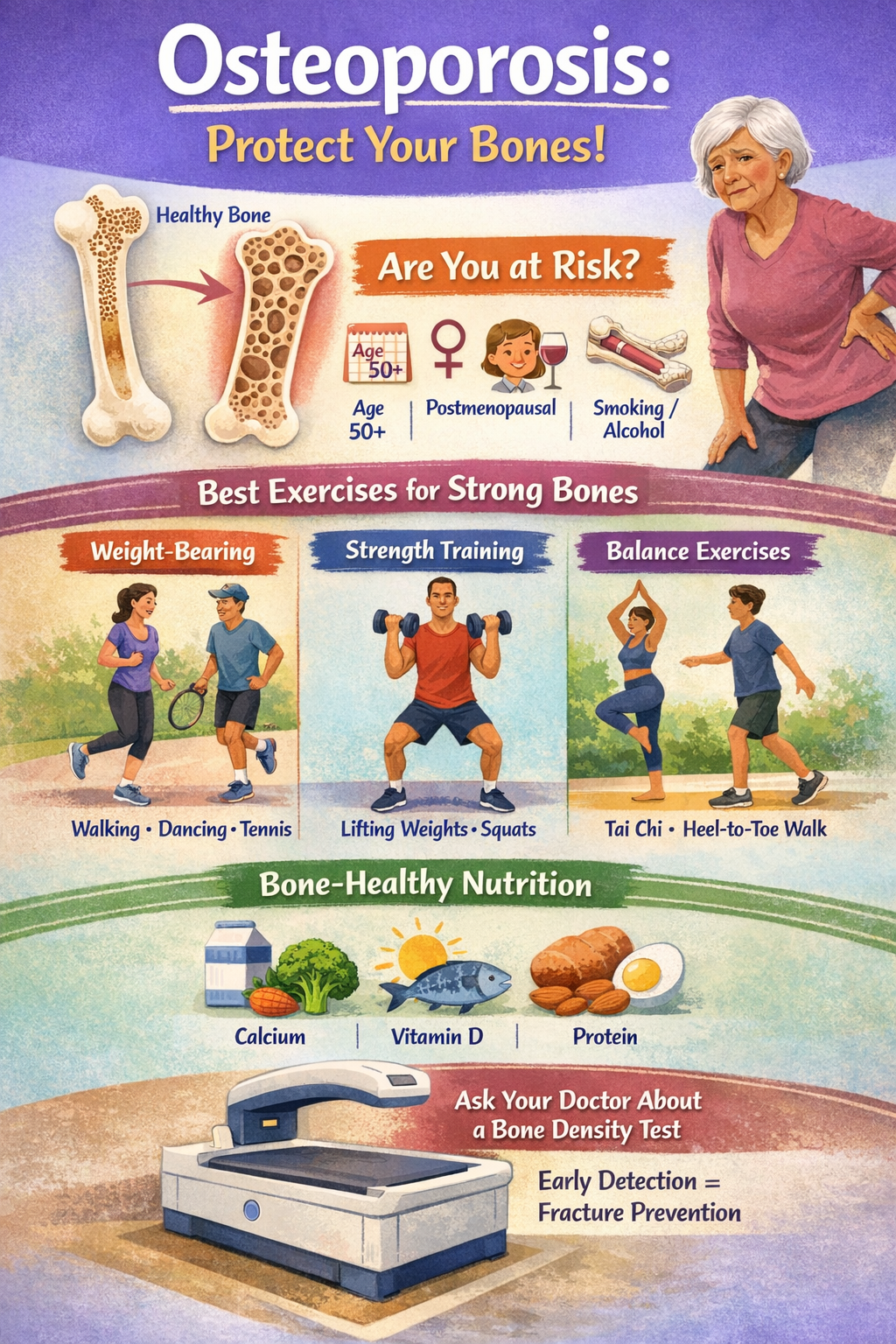
🌟 Osteoporosis: What You Can Do to Protect Your Bones
Osteoporosis is known as a “silent disease” because bone loss often goes unnoticed until a fracture happens. The good news? Bone health can be improved at any age. Here’s how.
🦴 What Is Osteoporosis?
Osteoporosis happens when bones lose density and become easier to break. Common fracture sites include the spine, hip, and wrist.
🧍♀️ Who’s at Higher Risk?
People are more likely to develop osteoporosis if they:
✔ are age 50+
✔ are female (especially post-menopause)
✔ are low weight or have low muscle mass
✔ have low calcium/Vitamin D intake
✔ smoke or drink heavily
✔ use long-term steroids
✔ have a family history of fractures
💪 Exercises That Help Build Strong Bones
Exercise doesn’t just help—it’s one of the best tools to slow bone loss and prevent falls. Three categories matter most:
1. Weight-Bearing Exercises (Bone Strength)
These make your bones work against gravity. Great options:
🏃♀️ Walking (30–45 min, 4–6 days/week)
🚶♂️ Hiking
🕺 Dancing
🎾 Pickleball or Tennis
🪁 Low-impact aerobics
Tip: If you haven’t been active, start with 10–15 minutes/day and add time gradually.
2. Resistance & Strength Training (Bone + Muscle)
Strength training stimulates bone remodeling and prevents falls. Examples:
🏋️ Free weights
📦 Resistance bands
💪 Bodyweight exercises:
Squats or chair-sits (10–15 reps)
Wall push-ups (10–15 reps)
Step-ups (10 each leg)
Target: 2–3 days/week with rest days in between.
3. Balance & Stability Training (Fall Prevention)
Most fractures happen after a fall. These help prevent that:
🧘 Tai Chi
🌿 Yoga (modified)
🦩 Single-leg balance (hold 10–30 sec)
👣 Heel-to-toe walking (down a hallway)
Even 5–10 minutes/day makes a difference.
🍎 Nutrition for Bone Health
Pair exercise with nutrients that support bone growth:
🥛 Calcium — dairy, leafy greens, almonds, tofu
🌞 Vitamin D — sunlight, fatty fish, fortified foods, supplements if needed
🥩 Protein — helps maintain muscle and bone structure
🩺 When Should You Ask About a Bone Scan?
Talk to your doctor if you:
✔ are a woman 65+ or a man 70+
✔ have broken a bone from a minor fall
✔ are younger but have risk factors
✔ are on long-term steroids
✔ are losing height or have a stooped posture
✨ Bottom Line
You can’t change getting older, but you can change how strong your bones stay. Early screening, smart exercise, and proper nutrition all reduce fracture risk and help keep you active and independent. Don’t forget, treating osteoporosis is MUCH easier than treating a hip fracture or being in chronic pain from a spine fracture. Don’t be afraid to talk to your doctor about medications for treating osteoporosis; it is critical you understand the pros and cons of your treatment while minimizing side effects!
 The Healthy Life